A Korean holiday took place on Friday, October 9, to celebrate the creation of their Hangul alphabet. And Sunday, October 11th there were no church meetings held so that families could watch or listen to the 185th semi-annual LDS General Conference. Bob and I decided this was the perfect weekend to get out and explore Korea - particularly Jeollanam-do, the southwest province. We took the risk of running into horrible traffic by leaving Seoul of Friday morning, with the consolation that we would get to listen to conference in the car. And yes, it was a very frustrating 6-hour drive to our first destination, the magnificent Daedun mountain. It is located between Daejeon and Jeonju, a distance that should have taken 2 1/2 hours, and which drove Bob to solemnly vow NEVER to travel on a Korean holiday again! But I think he will agree that the reward was worth it at the end of the day. Because of our 2:30 p.m. arrival, we opted to take the cable-car half-way up the mountain. It was a popular day for hiking, and the trails were crowded as we began our trek. However, many decided the suspension bridge and steep staircase which lay ahead were more than they could conquer. For us, those challenges provided compelling motivation along the thrilling ascent to summit Macheondae.

The six-minute cable ride was a thrill in itself. We were grateful to have by-passed the steep and arduous climb up - especially after having descended the challenging trail at the end of the day! The craggy peaks that greeted us were beginning to boast an array of autumn color.


A short steep climb took us to the shaky Geumgang suspension bridge with a view of the intimidating Samseon stairway in the distance. The relatively short bridge spans a deep chasm across the mountain which provides nice views if you can steady it's sway to snap a photo or two.
The mountainous terrain of Korea is breathtakingly beautiful. While the solid granite peaks are reminiscent of the Rocky Mountains of Utah, the lush green vegetation is purely Korean. In the distance we caught a glimpse of our next obstacle - the steep, 70-degree inclined red metal staircase. The climb up it seemed longer than it appears, and the most daunting part for me was turning around on the stairway to snap photos documenting our success. The narrow stairs provided little turning radius and for one with some fear of heights, I had to focus my gaze on the solid encasing of the staircase. But, wow, what spectacular views!
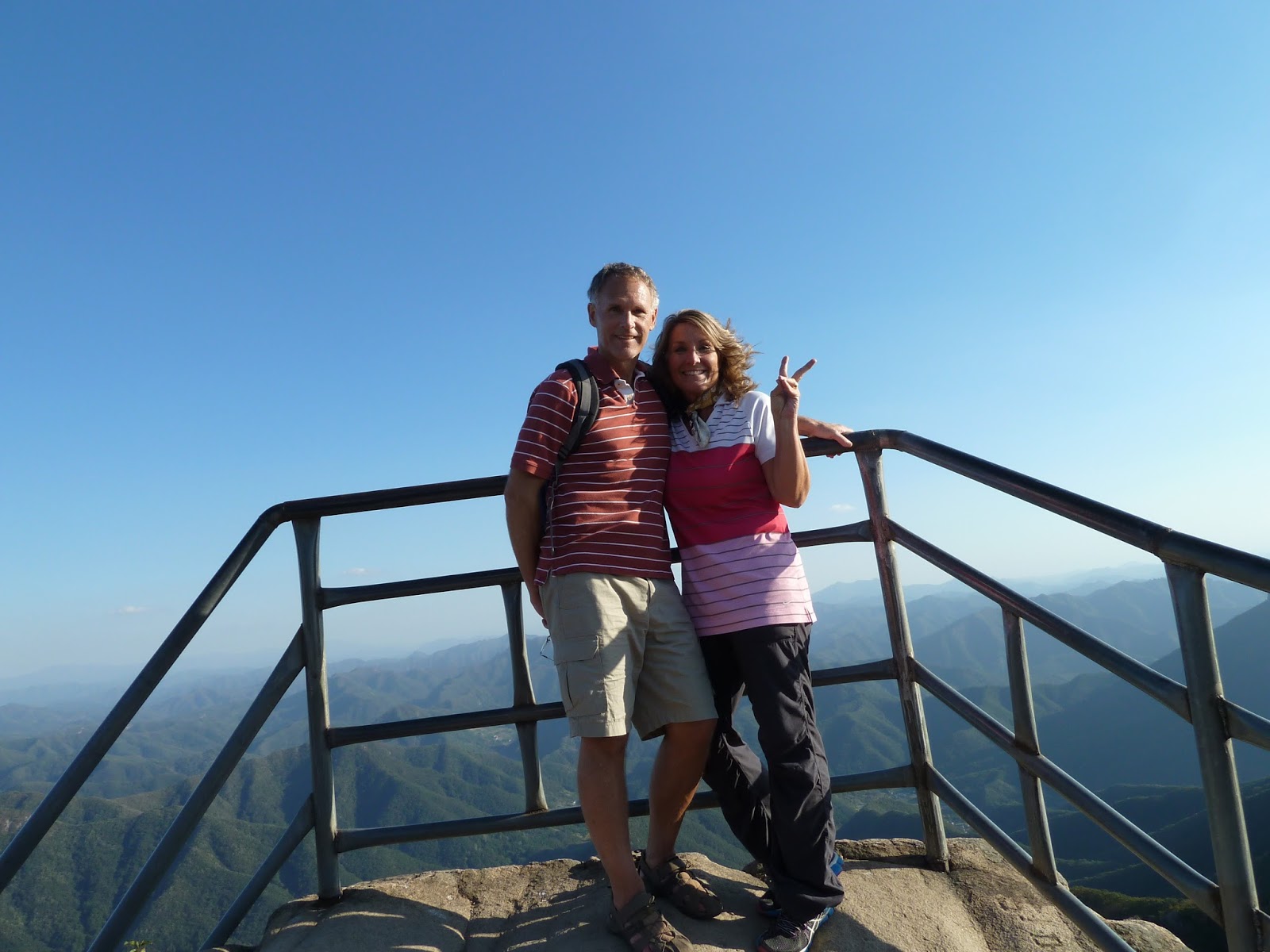
Atop the highest peak, we could vaguely discern the tower which marked our goal. In true Korean fashion, the remainder of the climb was rugged and steep. Our success was cheered by hikers who preceded us to the summit.
The brisk cool air turned cold upon my clothes which were damp with sweat as we began our sharp descent down Daedunsan. Crowds waiting to ride the cable-car spurred our desire to traverse the remaining trails to the bottom. The wobbly-legged task was difficult but satisfying and our timing perfect. Daylight began to fade as we drove 1 1/2 hours south to Guwangu.
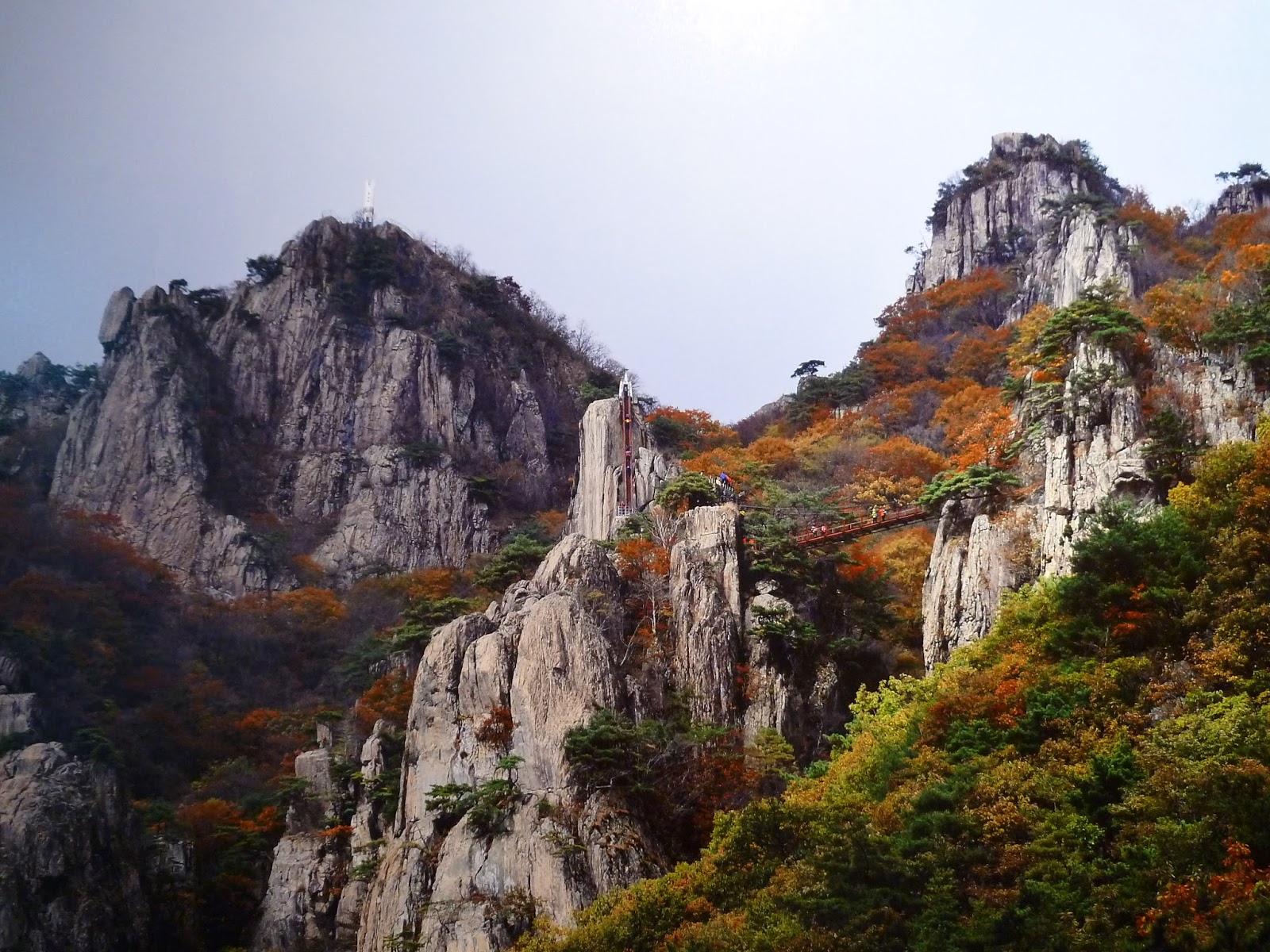
If this post hasn't inspired you yet, then this photo, taken from a wall in the cable-car lobby, might be just the inspiration you need to make the trek to the dramatically daring Daedunsan!
Equally refreshing and beautiful were the talks given by living prophets and apostles during the conference of The Church of Jesus Christ of Latter-day Saints. You can watch or listen to some of them yourself by clicking
here. Our dear President Thomas S. Monson leads our church with an amazingly joyful optimism. Please listen to one of his messages and feel his wonderful spirit by clicking
here. And then, if you have ever wondered why church is important in addition to just being a good person, please listen to the address,
"Why the Church", given by Elder D. Todd Christofferson. I love those who lead our church, because they love the Savior completely and sincerely, as do I!